
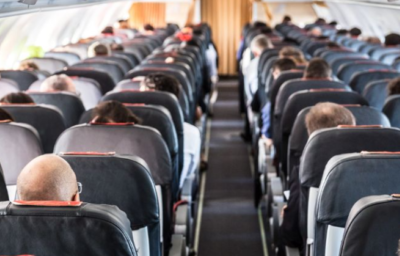
Travelling with COPD: Safe Travel Guide

Written by: Sarah Findlay Travel Insurance Expert

Reviewed by: Tracey Culwick Compliance Officer
Last updated: 9 July, 2026
Read time: 5 minutes
What is COPD?
Chronic Obstructive Pulmonary Disease (COPD) is a long-term lung condition that makes it hard to breathe because airflow in and out of the lungs is partially blocked.
Can you fly with COPD?
Most people with stable COPD can fly. However, because aeroplane cabins have lower oxygen levels and different air pressure than sea level, you must have a Fit to Fly (Hypoxic Challenge) test if your lung function is below a certain level. Preparation with your airline regarding oxygen use is the most critical step.
Understanding Air Pressure and Your Lungs
When you fly, the aircraft cabin is pressurised—but not to sea level. At cruising altitude (around 30,000 feet), the cabin pressure makes it feel like you are at about 8,000 feet.
This means there is less oxygen in the air.
For a healthy person, this usually isn’t an issue. But with COPD, your lungs already work harder to absorb oxygen. This can sometimes lead to hypoxemia (low oxygen levels in the blood).
What you might feel:
- More breathless than usual
- Tired or fatigued
- Less relief from resting compared to being at home
Even though you’re sitting still, your body is working harder to get enough oxygen. This is why planning ahead is so important.
Learn more about managing COPD symptoms at COPD Foundation | Learn More, Take Action and Breathe Better
The Fit to Fly Test: What to Expect
Before travelling, your doctor may recommend a Hypoxic Challenge Test (HCT), often called a “fit to fly” test.
The Process
You’ll breathe air that simulates high-altitude conditions for around 20–30 minutes. During this time, your oxygen levels are carefully monitored.
The Outcome
- If your levels stay stable → You’re fit to fly without extra oxygen
- If they drop → You’ll be prescribed in-flight oxygen at a specific level
Important Tip
Arrange this test at least 6 weeks before travel to allow time for planning.
Portable Oxygen Concentrators (POCs) vs. Airline Oxygen
If your doctor has advised that you’ll need oxygen during your flight, there are two main ways to arrange this. Understanding the differences can help you choose the option that feels most comfortable and practical for your journey.
Option A: Portable Oxygen Concentrators (POCs)
A Portable Oxygen Concentrator, often called a POC, is a small, lightweight device that delivers oxygen as you breathe in. Many travellers prefer this option because it gives them more control and flexibility.
What makes POCs a popular choice:
- Airline-approved devices
Most airlines accept specific POC models, but you’ll need to check in advance that yours is on their approved list. - Freedom to move
Because the device is portable, you can use it not only on the plane but also in the airport and at your destination. - Battery requirements
Airlines require enough battery power to last 150% of your total journey time.
This is a safety buffer in case of delays, stopovers, or time spent on the runway. - Consistency
You’re using your own familiar equipment, which many people find reassuring.
Things to consider:
- You’ll need to carry spare batteries, which can add weight
- Not all POCs provide continuous flow (some are pulse-dose only), so you must ensure it matches your prescription
- You are responsible for managing the device throughout your journey
Tip: Speak to your oxygen provider before travelling to make sure your device is suitable for flying.
Option B: Airline-Provided Oxygen
Some airlines offer oxygen onboard as a service, although this is becoming less common.
How it works:
- Arranged in advance
You’ll need to request this service well before your travel date - often at least 1–2 weeks ahead. - Medical clearance required
Your doctor will usually need to complete a medical form confirming your oxygen needs. - Set delivery
The airline provides oxygen at a fixed flow rate during the flight.
Things to consider:
- There is usually a fee, which can vary significantly between airlines
- Availability may be limited, especially on smaller aircraft
- You won’t have oxygen support in the airport - only during the flight itself
The Important Rule (and Why It Matters)
It’s very important to know that:
You cannot bring your own pressurised oxygen cylinders onboard a plane.
This rule is in place for safety reasons, as pressurised tanks can pose a risk during flight.
5 Practical Tips for a Smooth Journey
1. Special Assistance
Book wheelchair-to-gate support, even if you can walk. Airports are large, and conserving energy is key.
2. Early Boarding
Request priority boarding to avoid rushing and unnecessary stress.
3. Hydration & Humidity
Cabin air is very dry. Drink plenty of water and avoid caffeine to prevent dehydration and thick mucus.
4. Keep Medications Close
Have your rescue inhaler (e.g., Salbutamol) and prescription easily accessible, preferably in the seat pocket.
5. Check Your Destination Altitude
High-altitude destinations (like Mexico City or mountainous areas) can affect your breathing just like flying.
Securing Travel Insurance for COPD
Travel insurance is commonly considered an important part of planning a trip for people living with COPD.
Why It Matters
Emergency care abroad, especially if it involves oxygen or a hospital stay, can be very expensive. The right cover protects you from these unexpected costs.
Be Honest When Declaring
Always disclose:
- If you use oxygen at home
- If you’ve been advised to use oxygen during your flight
Missing this information could invalidate your policy.
Choosing the Right Cover
Many standard insurers don’t fully cover COPD. It’s important to choose a provider that specialises in respiratory conditions.
Get a quote from Total Travel Protection
Your breath shouldn't be taken away by the cost of medical emergencies. Get a quote for COPD travel insurance today and ensure you're covered for every breath of your journey.